The Metric Nobody Brags About: The Real Impact of Reverse Logistics on Your Bottom Line
Nobody posts their return rate on LinkedIn.
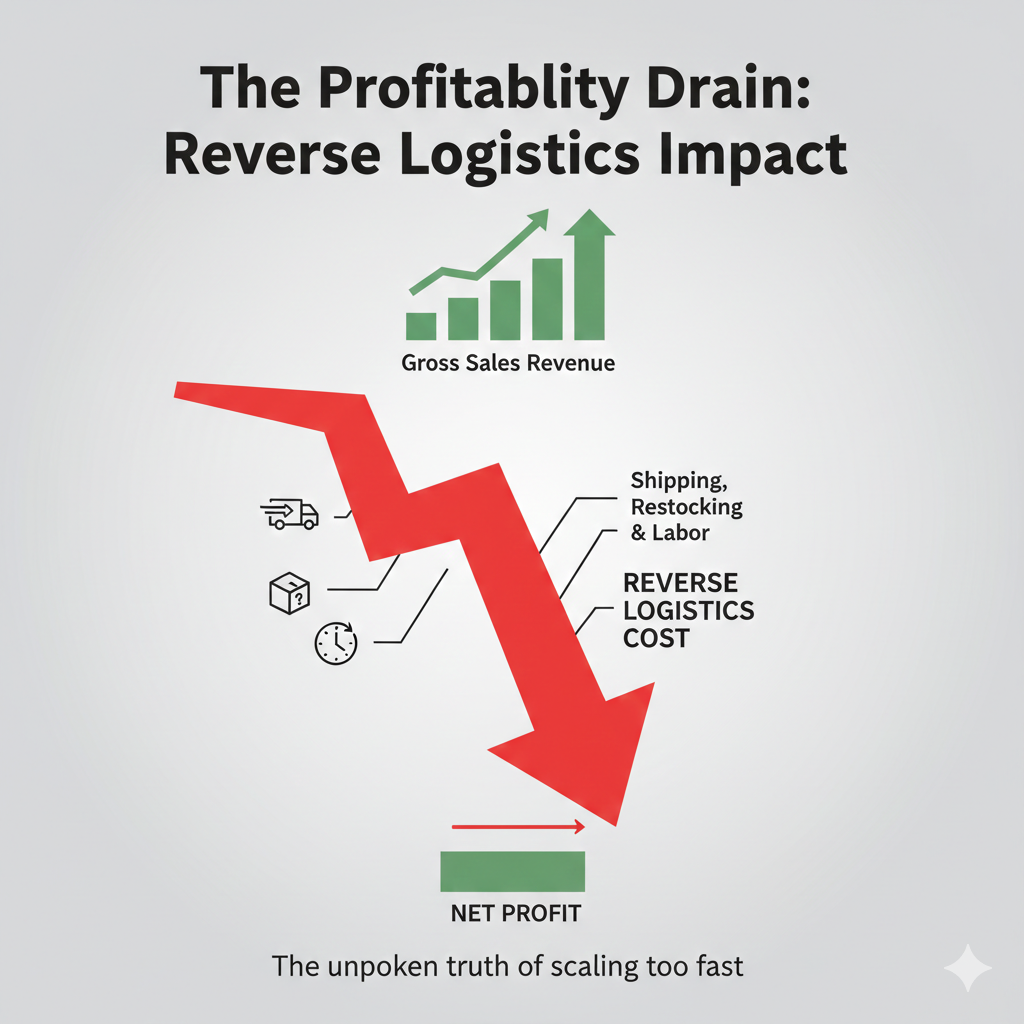
We love sharing screenshots of our Shopify “Gross Sales” or bragging about a 4x ROAS in board meetings. It feels like winning. But there’s a silent, awkward silence when it comes to the cost of Reverse Logistics.
Working on returns isn’t “sexy.” It doesn’t feel like growth. In fact, most founders treat it like a chore—a tax they have to pay for being in business. But while you are focused on the “Top Line,” your net profit is being quietly liquidated by every package that travels back to your warehouse.
The “Volume Trap”
The logic seems simple: “If I want more profit, I need more sales.” So you scale your Ads, you flood your store with traffic, and your sales go up.
But here is the trap: Returns scale faster than growth. As you reach colder audiences through Ads, the “misunderstanding” rate grows. People buy without knowing the brand, the sizing, or the specs. Suddenly, you aren’t just shipping products; you are shipping future headaches.
The Math for Low-Margin Heroes
If you are selling a product with a tight margin, a single return isn’t a “neutral” event. It’s a catastrophe.
Let’s tell a quick story: Imagine Alex, who sells eco-friendly sneakers. He makes a $10 profit per pair. Business is booming! He sells 100 pairs today.
- Gross Profit: $1,000.
- The Glitch: 10 customers return their shoes because they “didn’t fit as expected.”
- The Cost: Between shipping, cleaning, restocking, and packaging, each return costs Alex $25.
Alex didn’t just lose the $10 profit from those 10 sales ($100). He also lost $250 in operational costs. To recover that $350 hole, Alex now has to sell 35 more pairs just to get back to zero. He is running on a treadmill that is moving faster than he can sprint.
Why Scaling Ads Isn’t the Solution
If your “bucket” is leaking, pouring more water (Ads/Traffic) into it only makes the floor wetter. Scaling an inefficient operation doesn’t make you rich; it makes you tired.
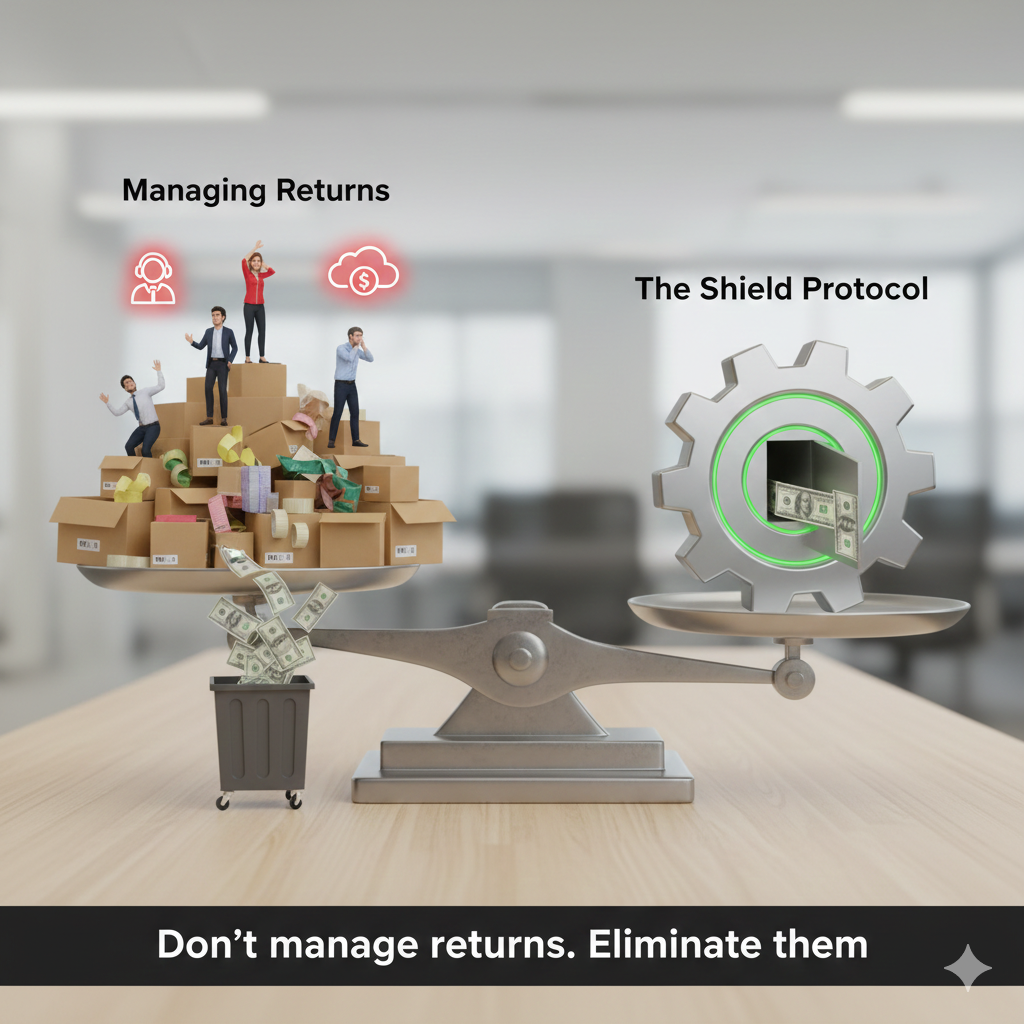
The long-term solution isn’t just “managing” returns better—it’s ensuring the return never happens in the first place. By focusing on the Pre-Shipment phase, you aren’t just saving on shipping labels. You are protecting your brand equity, your warehouse’s sanity, and most importantly, your cash flow.
EXCLUSIVE ACCESS: OPERATIONAL ENGINEERING BLOCK 1
We don’t want you to invest in a full $3,000 system without first seeing the cash return to your balance sheet. We want the results to fund your transformation.
For this reason, exclusively through this article, we are granting independent access to Block 1.
- Investment: $497 USD.
- Purpose: Immediate tactical implementation on one critical SKU.
- Effect: A reusable asset designed to be 100% effective from week one.
The protocol is simple:
- Acquire Block 1.
- Implement it on a single product in your catalog.
- Visualize the results.
Once you verify the effectiveness of this first maneuver and see the clear improvements, you will be ready to scale the system to the rest of your operations. This is a zero-risk upgrade: let the margin we rescue today pay for your operational excellence tomorrow.
Our Engineering Guarantee: This protocol comes with a total refund policy. If it doesn’t meet our efficiency standards, we will return your investment. It does not matter when you purchased the product; if it doesn’t work for you, we don’t want your money.
[ Acquire Block 1 – $497: Start Protocol → ]